Walnut wood appears in more and more luxury furniture projects, from villa living rooms to boardrooms. Its appeal comes from a rare combination: striking natural grain, a warm and calm colour, and a stable structure that rewards fine craftsmanship. Understanding these qualities also helps you judge whether a walnut piece is truly well made.
What makes walnut wood different
Walnut is a hardwood valued for both its appearance and the way it machines and finishes. At VENIC we work mainly with North American walnut, selected board by board for colour and grain before production begins.
1. Grain – every surface is unique
Walnut's flowing grain mixes lighter and darker tones, waves and figures, so no two boards are identical. When craftsmen select and book-match veneers or solid boards, a table top or wall panel becomes a continuous picture – the reason walnut is so often chosen for statement pieces such as executive desks and meeting tables.
Solid wood and veneer – both have a place
Solid walnut is ideal for frames, legs, edges and parts that carry load or wear. High-quality walnut veneer on a stable core allows large, perfectly matched surfaces and wall panels that stay flat. A well-designed piece uses each where it performs best.
2. A warm, elegant colour that suits many styles
Walnut's deep, calm brown works in both homes and offices. It pairs naturally with leather, natural stone, brass and premium fabrics, and suits classic, modern and Indochine interiors alike. Over time the colour matures gently, which many owners consider part of its character.
3. Stable, durable and pleasant to use
A dense, stable structure means that when walnut is properly dried, processed and finished, it keeps its shape and strength for many years. It also feels solid and warm to the touch – a quality clients notice immediately in a desk or dining table they use every day.
Longevity still depends on care. Our walnut furniture care guide explains how to keep the finish and colour at their best.
4. The value is in the finishing
Walnut is a premium material, but the final quality is decided by the workshop. The same boards can become an ordinary piece or an heirloom depending on how they are joined, sanded and finished.
- Precise joinery that stays tight through years of use.
- Softly rounded edges and consistent radii.
- Smooth surface coatings that enhance rather than hide the grain.
- Careful colour matching between boards, doors and panels.
- Coordinated design from loose furniture to cabinetry and wall panels.
A precious material deserves skilled hands.
How to judge a well-made walnut piece
- 1Look along the surface at an angle – the finish should be even, without ripples or dull patches.
- 2Check that grain and colour flow naturally across joints, drawers and doors.
- 3Open drawers and doors – they should move smoothly and close evenly.
- 4Run your hand along edges and the underside – good workshops finish the parts you do not see.
- 5Ask which parts are solid wood and which are veneer, and how the finish should be maintained.
Choosing the right finish for walnut
The finish protects the wood and decides how the surface looks and feels. Discuss it early, because it affects both appearance and maintenance.
Lacquer finishes
A lacquer forms a protective film on the surface. It is easy to clean and well suited to busy desks, meeting tables and dining tables. Sheen levels range from matte to glossy depending on the design.
Oil finishes
An oil finish penetrates the wood and gives a natural, tactile surface that shows the grain very clearly. It usually needs periodic re-oiling, so it suits owners who enjoy caring for their furniture.
Pairing walnut with other materials
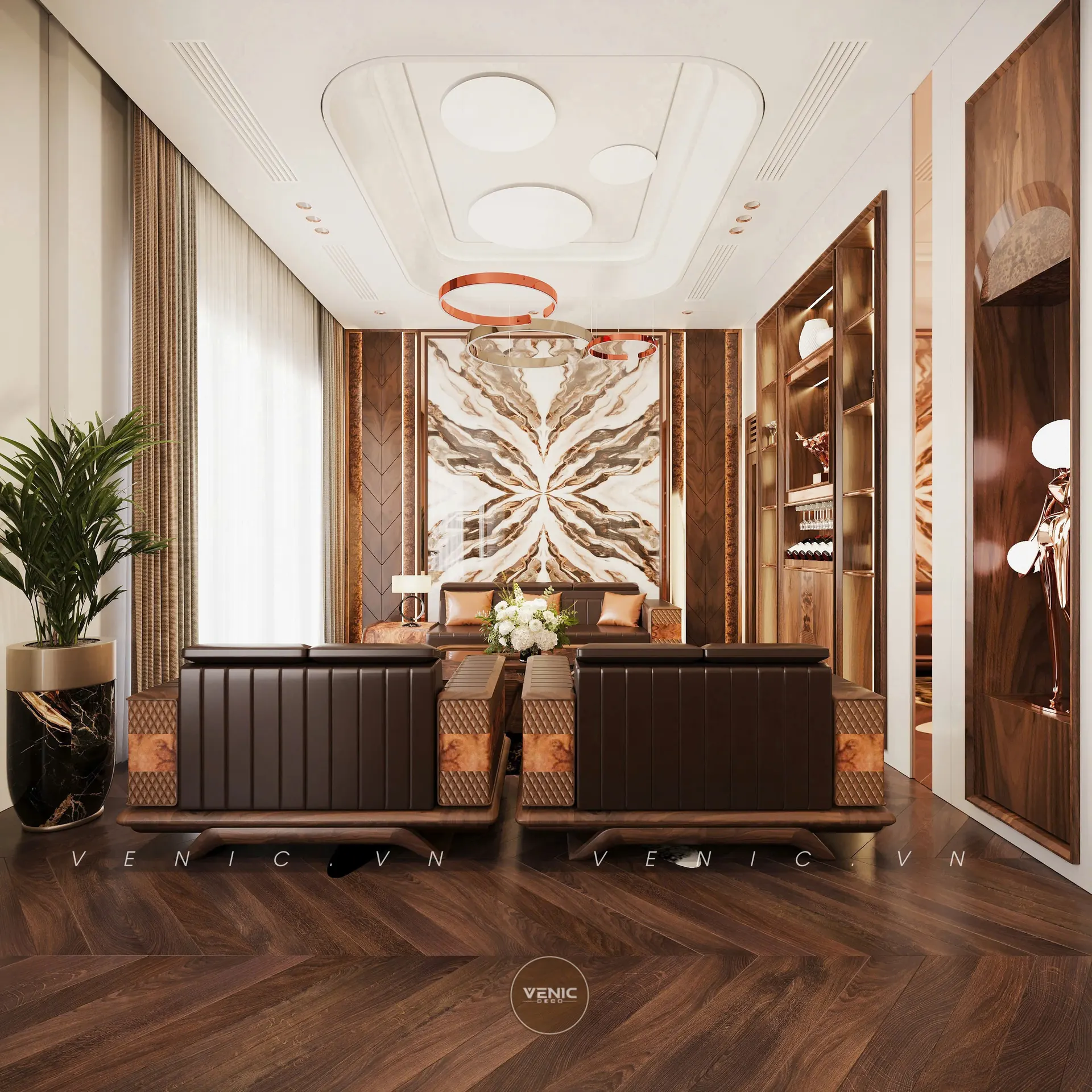
Walnut is at its best in a restrained palette. Italian leather adds softness and comfort to chairs and desk inlays; natural stone brings contrast to table tops and cabinet surfaces; brass and metal details add a precise, modern accent. Repeating the same few materials across a room or a whole villa creates the calm, coordinated look that defines luxury interiors.
Where walnut works best
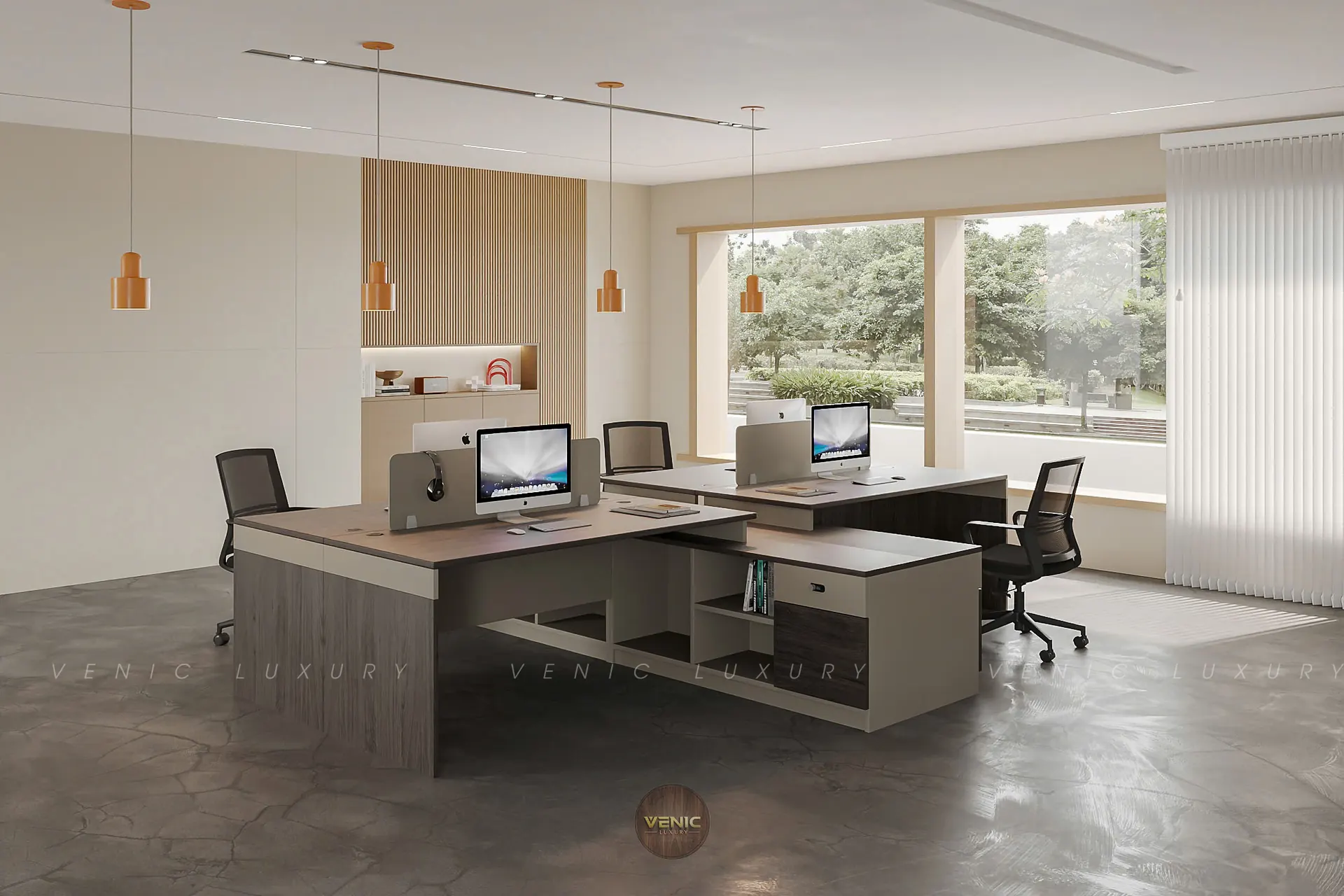
- Executive offices: desks, credenzas and wall panels that express status – see our executive desks.
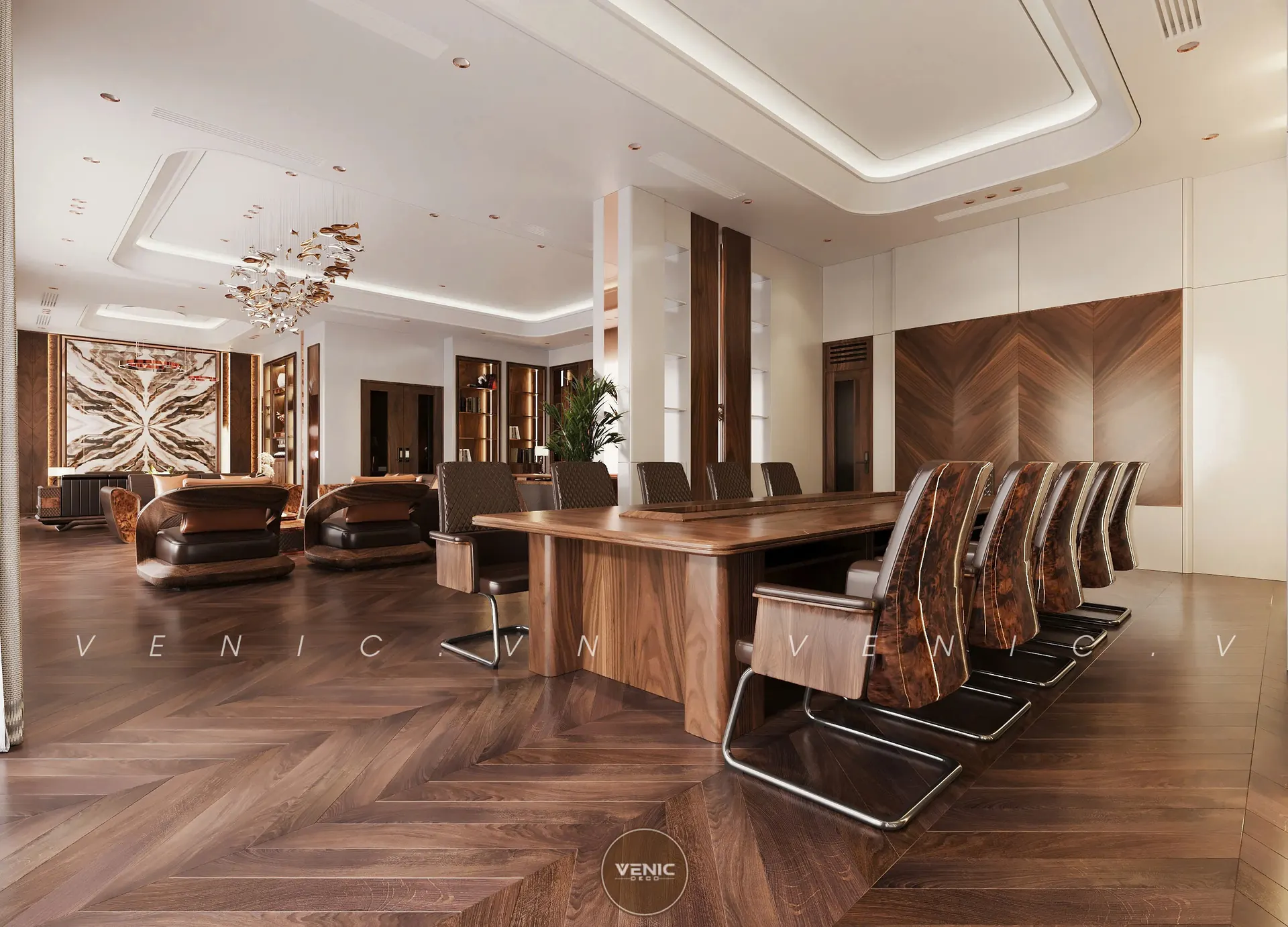
- Boardrooms: long tables with matched tops – see our meeting tables.
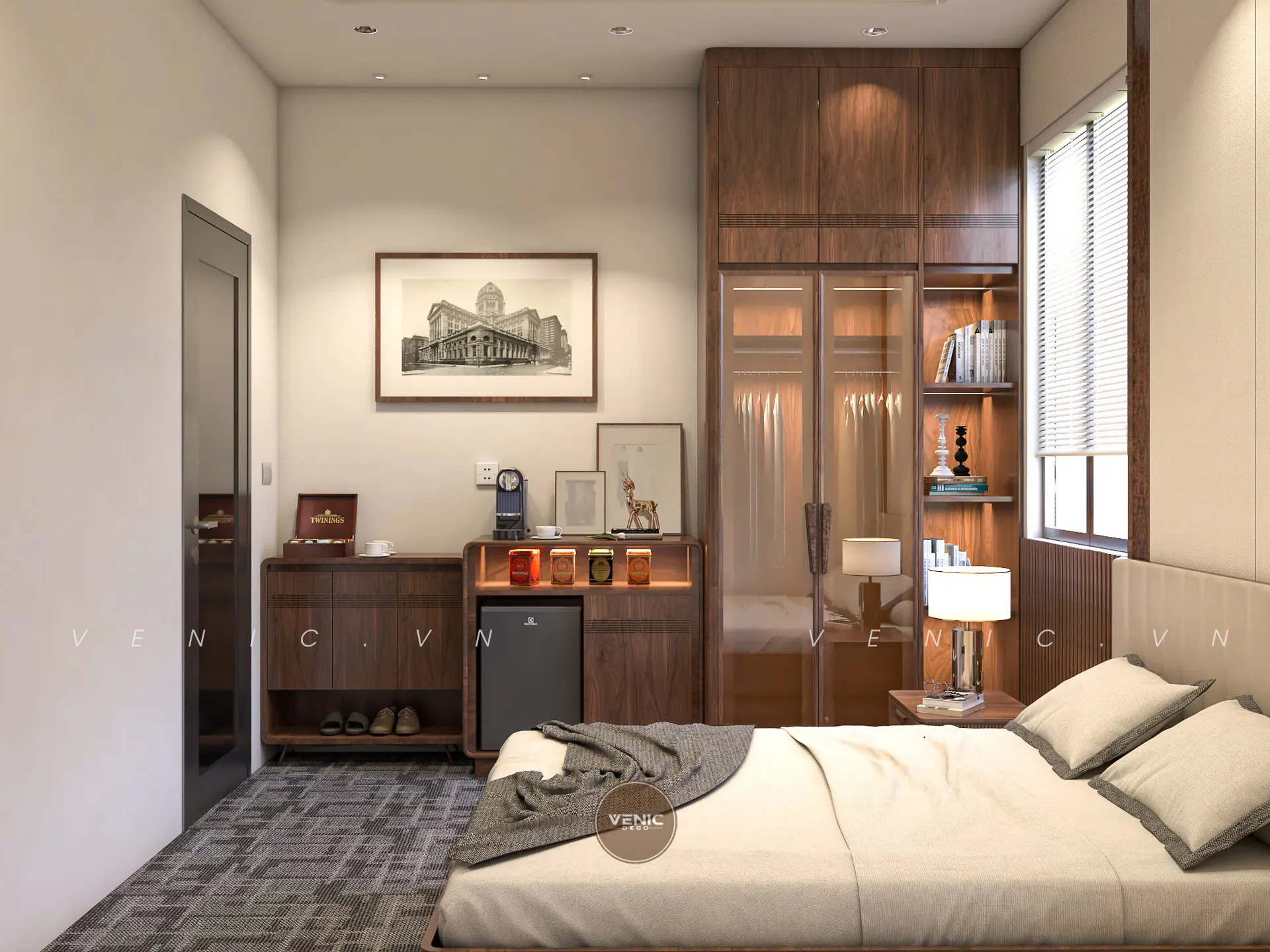
- Villas and premium apartments: living room, dining and bedroom furniture with a consistent material language.
Walnut furniture made in VENIC factories
With our own factories in Vietnam and craftsmen with more than 20 years of experience, VENIC controls every step from timber selection to manufacturing and installation. We produce for private clients and corporate projects, and for international partners through OEM / ODM manufacturing.
Looking for custom walnut furniture? Request a quote and share your drawings or ideas with our team.
Frequently Asked Questions
Is walnut a good wood for furniture?+
Yes. Walnut combines attractive natural grain, a warm colour and a stable structure, and it machines and finishes very well – ideal for high-end furniture.
Is solid walnut better than walnut veneer?+
Each has its place. Solid walnut suits frames, legs and edges; high-quality veneer on a stable core allows large matched surfaces and panels that stay flat.
Which walnut does VENIC use?+
VENIC works mainly with North American walnut, selected board by board for colour and grain before production.
Does walnut furniture need special care?+
Only simple care: keep it away from strong sun and heat, dust regularly with a soft cloth and protect the surface from heat and moisture.